
Real Estate Guides | 5 minute read
Property Research Essentials: How to Find Building Permit Records
By Laura Pop-Badiu | Nov 26, 2018
Editor’s Note: This article was updated on 27 August, 2025. While some may view building permits as a regulatory burden that complicates building or renovation, they nevertheless remain an integral step of the process. That’s because permits ensure that work is done according to a code that’s designed for the safety and security of residents…
Editor’s Note: This article was updated on 27 August, 2025.
While some may view building permits as a regulatory burden that complicates building or renovation, they nevertheless remain an integral step of the process. That’s because permits ensure that work is done according to a code that’s designed for the safety and security of residents and occupants.
Permits also serve as an important point of reference in research as they can tell the story of a property’s history of construction, renovation or other types of alteration.
How to Find Building Permit Records
Permits are granted by a regulatory body and are a part of the public record. Consequently, there are many ways to determine which permits were given, based on how they were issued and archived.
In fact, depending on the location, finding building permit records can be relatively easy through entities such as:
- borough offices
- building departments
- city planning offices
- zoning and code enforcement offices
In NYC, permits are approved by the Department of Buildings (DOB), which ensures the safe and lawful use of structures and construction sites across the city.
Step 1: Identify the Jurisdiction
Identify the city, township or village where the property you are interested in is located. Once you know where to look, you’re closer to how to find building permit records for the property.
Step 2: Check How to Find Building Permit Records Online
Next, check if there’s an official website where you could search for information online. Keep in mind that not all jurisdictions have a digital presence or a comprehensive digital record of permits. If not, the next best option is to call to inquire about researching permits in person.
Step 3: Use a Third-Party Database to Access Permit Records Across Jurisdictions
If you’re researching properties in multiple cities or states, relying solely on local government portals may not be practical. In such cases, a third-party platform like PropertyShark offers a centralized way to access permit records, ownership information, and related data from a wide range of jurisdictions.
How to Search for Permits
- Enter the Property Information: Begin by typing the property’s street address or parcel ID into the search bar. Click “Search” to view the property’s full report.
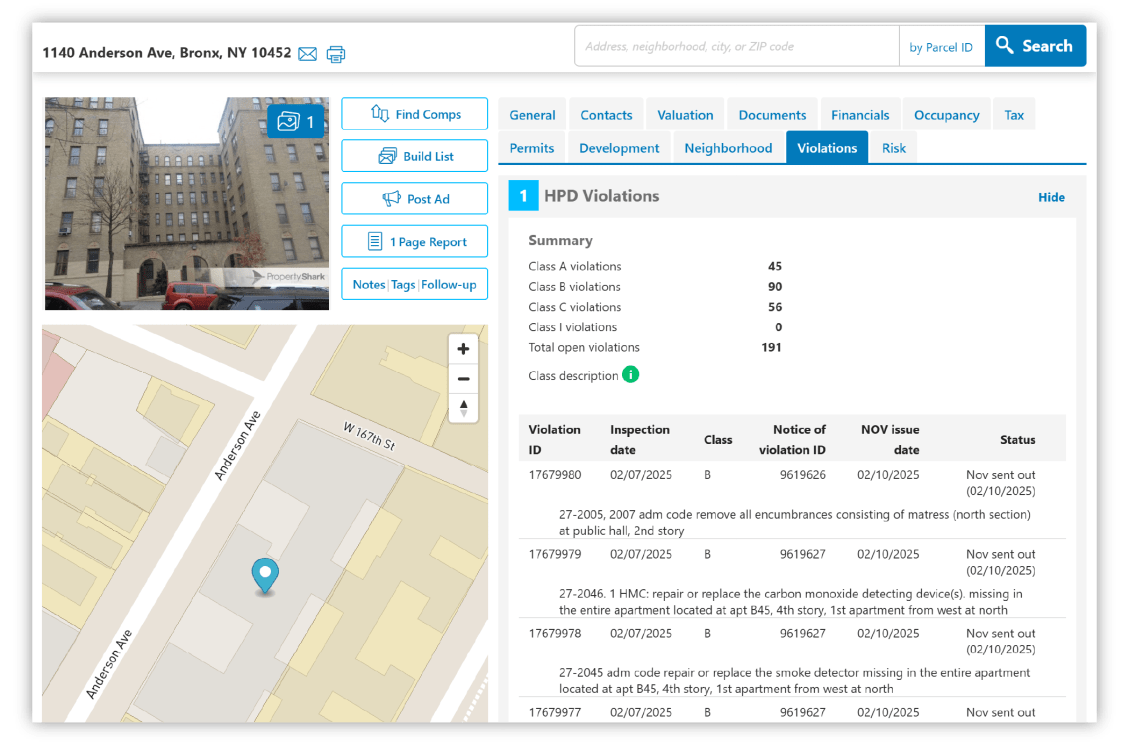
- Open the Permits Tab: Once the property report loads, navigate to the “Permits” tab. If building permit data is publicly available for that property, it will appear here.
- Review Permit Details: The permit section typically includes:
- Type of permit issued (e.g., electrical, plumbing, general construction)
- Description of the work being performed
- Current status of the permit (e.g., issued, expired, closed)

4. Check for Related Data: Depending on the location and data availability, you may also find:
- Inspection history
- Code violations
- Risk or safety-related notes
This broader context can provide a more complete understanding of a property’s renovation history or compliance issues.

Find building permit records faster with PropertyShark.
We’ve already touched on how to find out if a building permit was obtained, but let’s get a better understanding of what kind of permits there are to find.
Building Permit Records by Type of Project
Typically, these depend on whether the property in question is meant for residential or commercial use. They also represent primary types in permit classification.
- Residential Project Permits
This building permit type can refer to building a new home from the ground up; making additions or renovations that expand an existing structure or change its layout; or adding separate living spaces, like a cottage in the backyard or an accessory in-law suite.
- Commercial Project Permits
This permit type applies to work planned on commercial spaces, like office, retail and dining. These projects usually imply more complex work and must adhere to stricter codes compared to residential projects.
Building Permit Records by Type of Work
These are often secondary in permit classification. Depending on the type and scope of the project, it could require multiple overlapping permits by type of work. As a rule of thumb, any work that affects the ventilation, electrical and/or exits will require permits to proceed.
For example, remodeling a kitchen might require separate permits for structural changes (like removing or adding a wall); plumbing updates (such as modifying structural supports or rerouting pipes); electrical updates (including relocating outlets or upgrading wiring); any HVAC changes and so on.
Example of Building Permit Type
In NYC, there are four primary permit types that can be obtained — new building (NB) and alterations (ALT) type 1, 2 and 3:
- NB refers to the construction of a new structure.
- ALT1 refers to major alterations that change the use, egress or occupancy of an existing structure.
- ALT2 refers to multiple types of work that don’t affect use, egress or occupancy.
- ALT3 refers to one type of minor work that doesn’t affect use, egress or occupancy.
If you’re looking to invest in a property, it’s always a good idea to do your research, and building permit records are an essential element of that due diligence. Fortunately, property data resources such as PropertyShark make finding building permits easier to help you make the smartest real estate investment decisions.
FAQs About Building Permits
What Is a Building Permit?
A building permit is an official approval issued by a local government agency that allows construction, alteration, demolition, or repair work on a property to begin. It ensures the project complies with local codes, zoning regulations, and safety standards.
In most cities, including NYC, permits are required for any work that affects a building’s structure, systems, or use. Common examples include major renovations, adding new rooms, or installing plumbing or electrical systems. Permits help protect occupants, workers, and future owners by confirming the work meets legal and safety requirements.
What Types of Building Permits Are There?
The most common types of permits are general construction, electrical, plumbing, mechanical, demolition, and sign permits.
Each permit type covers a specific category of work. For example, an electrical permit is required for installing or upgrading wiring, while a demolition permit is necessary when tearing down part or all of a structure. In some jurisdictions, smaller jobs may fall under “minor alteration” or “over-the-counter” permits, which are faster to process but still require approval.
What Building Permit Types Are There in NYC?
In NYC, the Department of Buildings (DOB) issues permits for a wide range of construction and maintenance activities. The primary permit types include General Construction (GC), Plumbing (PL), Electrical (E), Foundation (FO), Mechanical (MH), and Fire Suppression (FS) permits.
These permit types are assigned based on the nature of the proposed work. For example, a GC permit covers most structural and renovation projects, while a separate Plumbing (PL) permit is needed for water or gas line work. The DOB also issues “NB” (New Building) permits for entirely new structures and “A1,” “A2,” or “A3” alteration permits depending on the scope of interior work.
How Much Do Building Permits Usually Cost?
Building permit costs vary based on project size, location, and type, but generally range from a few hundred to several thousand dollars. In NYC, permit fees are often calculated as a percentage of the total job cost.
Rates can differ by permit type and additional fees may apply for plan review, inspections, or expedited processing. Always consult your local building department or project expeditor to get accurate fee estimates.
Do Permits Increase Property Value?
Permits themselves don’t directly raise property value, but they allow work to be done legally and safely—which can improve value over time. Completed and properly permitted renovations are more attractive to buyers and appraisers.
Unpermitted work, on the other hand, may reduce a home’s value or delay a sale, as buyers may worry about compliance and future liabilities. In short, permits are essential for ensuring your investment is recognized as legitimate and code-compliant during valuation.
Access comprehensive property data and ownership information with intuitive research tools.


Laura Pop-Badiu is a Senior Creative Writer at PropertyShark, with a degree in Journalism and a background in both hospitality and real estate. Laura is a certified bookworm with a genuine passion for the written word and a keen interest in the real estate market, having previously written for Yardi's RentCafe, CoworkingCafe and CoworkingMag. Her work has been featured in major publications like The New York Times, Forbes, NBC News, The Business Journals, Chicago Tribune, MSN and Yahoo! Finance, among others.
Recent Reports

NYC Homeownership by the Numbers: How Household Type, Gender & Age Shape Who Owns in Every Neighborhood
In a city where homeownership is dominated by married-couple families, Manhattan stands as the only borough led by nonfamily owners. At the same time, residents younger than 35 make up less than one tenth of the ownership pool and female-led family households outnumber male-led families across 91% of NYC neighborhoods.

Prices Rise in 32 of NYC’s Leading Neighborhoods as City and Manhattan Hit Record Highs
Q2 2026 saw NYC and Manhattan reach historic highs, with Brooklyn and Queens marking close to new records as well. Meanwhile, Hudson Yards remained at the top, Central Midtown posted its highest price ever and Carroll Gardens marked its third consecutive quarter over $2 million

2026 Q2 Foreclosure Report: Bronx Caseload Hits 7-Year High, Brooklyn & Manhattan Slow to 4-Year Low
Manhattan yet again slowed to become the city’s least active foreclosure market, Brooklyn’s caseload dropped so low it barely edged out Staten Island, while the Bronx heated up enough to surpass all boroughs except Queens.