

Manhattan Real Estate | < 1 minute read
Q4 2010 Manhattan Apartment Sales Map
BY PropertyShark Staff | Jan 6, 2011
The major brokerages in New York just published their quarterly market reports on the state of the Manhattan real estate market. PropertyShark has put together an interactive map, accompanying the quarterly market report of the Corcoran Group, which displays closed apartment sales in Q4 2010.
On the map, the size of the circle indicates the number of sales in the building and the color indicates the price per square foot. You can click on a building parcel on the map to see a mini pop-up report which displays details about sold units in that building.
For those who want to see an overview of the apartment sales activity for all of 2010, PropertyShark has compiled a second map that displays all apartments sold in Manhattan in 2010.
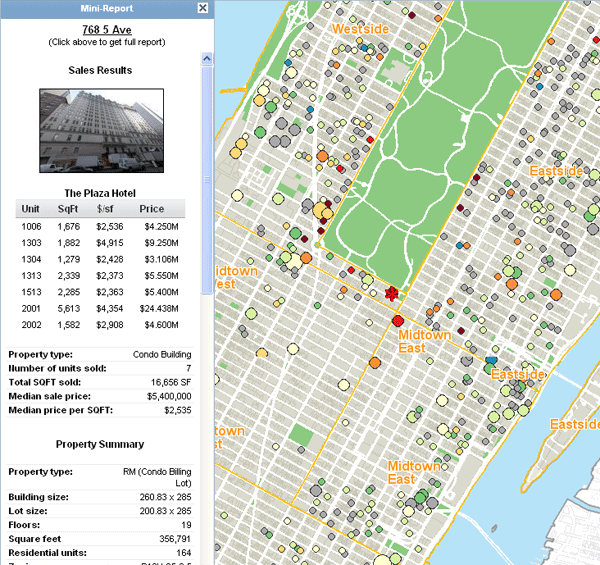
Q4 2010 Manhattan Apartment Sales Map
Click on the following link to browse current Manhattan apartments for sale.
Latest Posts
Want to stay on top of the real estate market?
Access comprehensive property data and ownership information with intuitive research tools.
POSTED IN: Manhattan Real Estate

Recent Reports

NYC Homeownership by the Numbers: How Household Type, Gender & Age Shape Who Owns in Every Neighborhood
In a city where homeownership is dominated by married-couple families, Manhattan stands as the only borough led by nonfamily owners. At the same time, residents younger than 35 make up less than one tenth of the ownership pool and female-led family households outnumber male-led families across 91% of NYC neighborhoods.

Prices Rise in 32 of NYC’s Leading Neighborhoods as City and Manhattan Hit Record Highs
Q2 2026 saw NYC and Manhattan reach historic highs, with Brooklyn and Queens marking close to new records as well. Meanwhile, Hudson Yards remained at the top, Central Midtown posted its highest price ever and Carroll Gardens marked its third consecutive quarter over $2 million

2026 Q2 Foreclosure Report: Bronx Caseload Hits 7-Year High, Brooklyn & Manhattan Slow to 4-Year Low
Manhattan yet again slowed to become the city’s least active foreclosure market, Brooklyn’s caseload dropped so low it barely edged out Staten Island, while the Bronx heated up enough to surpass all boroughs except Queens.