
New York Real Estate | 5 minute read
How to Do a Title Search on Property Yourself: A Step-by-Step Online Guide
By Laura Pop-Badiu | Apr 9, 2026
A property title search is the process of reviewing public records to confirm who legally owns a property and whether there are any liens, mortgages or legal claims attached to it. Explore our step-by-step guide explaining how you can perform a title search yourself.
Whether you’re buying, refinancing, investing in real estate or simply verifying ownership, knowing how to do a title search on property yourself can be a valuable skill.
A property title search is the process of reviewing public records to confirm who legally owns a property and whether there are any liens, mortgages or legal claims attached to it. While many buyers rely on title companies, much of this research can be done independently using publicly recorded documents.
Platforms like PropertyShark aggregate deed records, lien filings, mortgage documents, ownership history and tax data into one searchable property report, making it possible to conduct preliminary title research online.
Explore our step-by-step guide explaining how you can perform a title search yourself.
What Is a Title Search?
A title search involves reviewing public records to confirm the following information:
- Legal ownership
- The chain of title (historical ownership transfers)
- Mortgages and liens
- Judgments or other encumbrances
- Easements or restrictions affecting the property
The goal of a title search is to ensure that the property has a clear ownership history and that there are no outstanding claims that could affect a potential sale or transfer.
How to Do a Title Search on Property Yourself Step-by-Step
Note: The steps below apply to users with a paid PropertyShark subscription, which provides access to recorded deed and lien data.
Step 1: Locate the Property Information
Start by identifying the property on PropertyShark by street address, parcel number(APN) or owner name. After finding the property of your choice, open the detailed property report. This report typically includes current ownership details, legal description, parcel number and detailed property characteristics. Together, these data points establish the foundation for your title search.
Step 2: Review the Current Deed
Next, examine the most recent recorded deed. Depending on availability, the following details are bound to give you the necessary and most relevant insights:
- Current owner name
- Transfer date
- Recording number
- Grantor (seller)
- Grantee (buyer)
- Transfer price
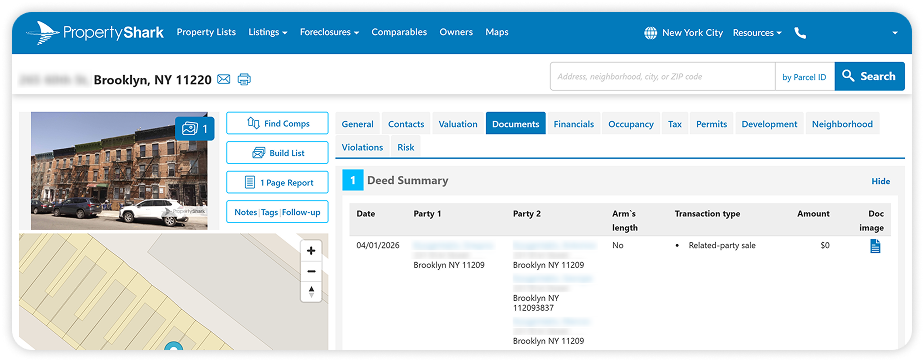
PropertyShark displays recorded deed information, document history and whether the transfer appears to be arm’s length (standard market transaction), making it easier to identify the most recent valid transfer.
Step 3: Trace the Chain of Title
A proper title search goes beyond the current deed. When learning how to do a title search on property yourself, it’s important to trace ownership back through previous transfers.
When reviewing previous deeds:
- Confirm that each transfer was properly recorded
- Check for gaps in ownership history
- Ensure the legal description remained consistent across documents
PropertyShark provides historical deed records in one place, which, compared to manual courthouse searches, is significantly easier and more time-efficient.
Step 4: Check for Liens and Mortgages
Even after establishing all the previous details, a title search is incomplete without reviewing potential claims against the property. To complete a thorough due diligence, make sure to also look for:
- Mortgage filings
- Tax liens
- Mechanic’s liens
- Judgments
- HOA liens
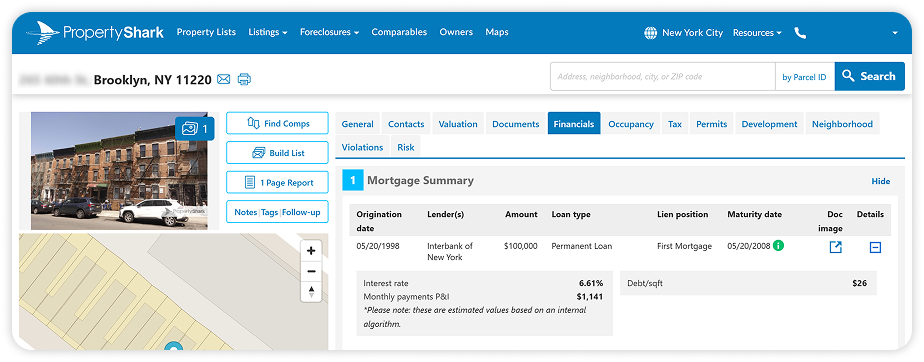
PropertyShark displays recorded mortgage details, including open mortgages, loan amounts, recording dates and lien filings. Be sure to distinguish between active mortgages and released or satisfied liens.
Step 5: Review Property Tax Information
Property tax records are an important part of title research. While tax status details may vary by jurisdiction, reviewing tax assessments and payment history helps provide additional context.
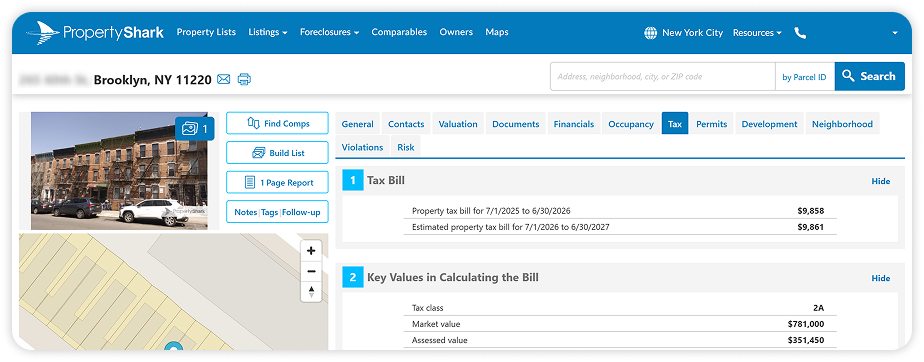
PropertyShark integrates tax history and assessment data into the property report, allowing you to see assessed value, tax amounts and historical tax data, among other relevant property-level details. This information helps identify potential financial obligations tied to the property.
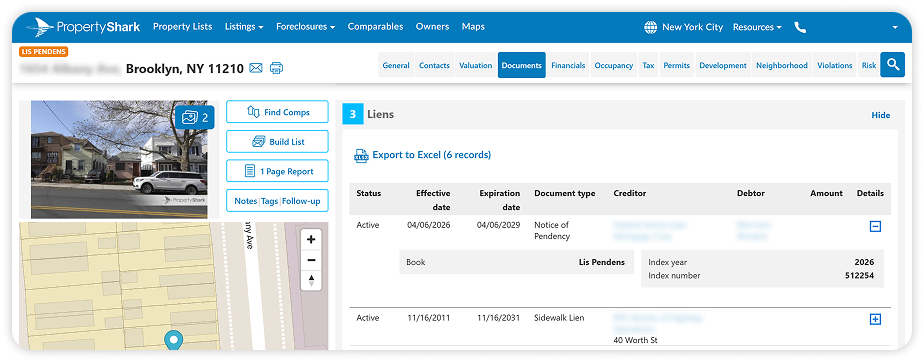
Step 6: Confirm There Are No Pending Legal Filings
Finally, check for any legal actions that could affect the property’s title. Make sure to look for lis pendens notices and foreclosure filings. Keep in mind that pending legal actions may impact ownership rights or future transfers.
How Can I Do an Online Title Search Myself?
If you’re wondering how can I do an online title search myself, the basic process includes the following steps:
- Search for the property on PropertyShark
- Review current ownership and deed history
- Examine mortgage and lien filings
- Check available tax records and confirm property tax status
- Verify if there are any open legal encumbrances
By reviewing these public records in one consolidated report, you can conduct preliminary title research efficiently.
Common Mistakes When Doing a Title Search Yourself
When learning how to do title search on property yourself, make sure to avoid these common errors:
- Failing to trace the full chain of title
- Overlooking smaller lien filings
- Confusing a mortgage release with an active mortgage
- Ignoring inconsistencies in the legal description
- Relying only on the current owner’s name and information
A thorough review requires examining both current and historical documents and cross-checking the information to reveal the most accurate overview.
When You May Still Need a Title Company
When doing a title search on a property, the ultimate goal of your search will determine the best strategy. Keep in mind that DIY title searches are useful for research, preliminary due diligence, investment analysis or ownership verification.
However, a licensed title professional or attorney may still be required for closing a sale, issuing title insurance or resolving legal disputes.
Why Using Public Records Matters
Title searches rely on officially recorded public documents. Traditionally, accessing these records required visiting county courthouses in person and reviewing documents manually, which can be a complex and time-consuming process.
Aggregated property data platforms simplify the process. Specifically, PropertyShark consolidates:
- Deeds
- Liens
- Mortgage filings
- Ownership history
- Tax records
As a public records and property data research tool, PropertyShark streamlines access to the documents needed for preliminary title research.

Start your title search with PropertyShark.
Conclusion
Understanding how to do a title search on property yourself empowers buyers, investors and researchers to verify ownership and uncover potential issues before moving forward.
By reviewing recorded deeds, tracing the chain of title, checking for liens and legal filings and analyzing tax data, you can conduct comprehensive preliminary due diligence.
Platforms like PropertyShark simplify this process by consolidating public records into a single, searchable property report — helping you move from who owns this property to is the title clear with greater efficiency and accuracy.
FAQs
How much does a title search cost?
Costs vary depending on whether you perform it yourself or hire a title company. DIY research typically requires access to public records platforms, while professional title searches involve service fees.
Can I do a title search without a lawyer?
Yes, you can review public records yourself. However, legal professionals are typically required for formal title opinions or insurance issuance.
How far back should I check the chain of title?
It depends on your purpose. Many professionals trace ownership back several decades to ensure continuity, but requirements may vary by jurisdiction.
What documents are included in a title search?
Deeds, mortgages, liens, tax records and other recorded documents affecting ownership.
Is a title search the same as title insurance?
No. A title search reviews recorded documents. Title insurance protects against future claims or defects not discovered during the search.
Access comprehensive property data and ownership information with intuitive research tools.


Laura Pop-Badiu is a Senior Creative Writer at PropertyShark, with a degree in Journalism and a background in both hospitality and real estate. Laura is a certified bookworm with a genuine passion for the written word and a keen interest in the real estate market, having previously written for Yardi's RentCafe, CoworkingCafe and CoworkingMag. Her work has been featured in major publications like The New York Times, Forbes, NBC News, The Business Journals, Chicago Tribune, MSN and Yahoo! Finance, among others.
Recent Reports

NYC Homeownership by the Numbers: How Household Type, Gender & Age Shape Who Owns in Every Neighborhood
In a city where homeownership is dominated by married-couple families, Manhattan stands as the only borough led by nonfamily owners. At the same time, residents younger than 35 make up less than one tenth of the ownership pool and female-led family households outnumber male-led families across 91% of NYC neighborhoods.

Prices Rise in 32 of NYC’s Leading Neighborhoods as City and Manhattan Hit Record Highs
Q2 2026 saw NYC and Manhattan reach historic highs, with Brooklyn and Queens marking close to new records as well. Meanwhile, Hudson Yards remained at the top, Central Midtown posted its highest price ever and Carroll Gardens marked its third consecutive quarter over $2 million

2026 Q2 Foreclosure Report: Bronx Caseload Hits 7-Year High, Brooklyn & Manhattan Slow to 4-Year Low
Manhattan yet again slowed to become the city’s least active foreclosure market, Brooklyn’s caseload dropped so low it barely edged out Staten Island, while the Bronx heated up enough to surpass all boroughs except Queens.