
New York Real Estate | 2 minute read
Queens Now One of the ‘Top 15 Most Expensive Housing Markets in North America’
BY PropertyShark Staff | Mar 15, 2016
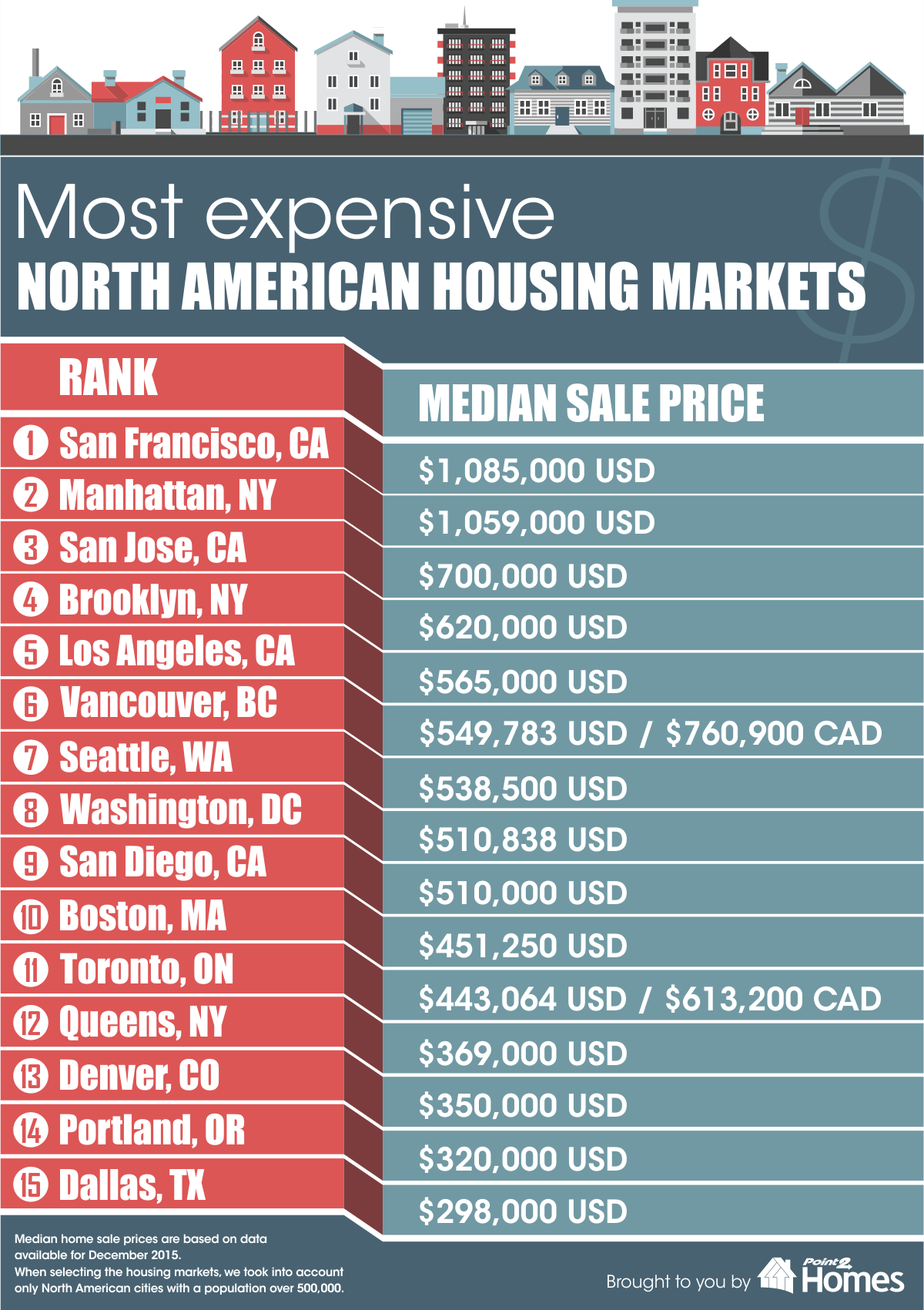
According to a recent analysis made by Point2 Homes, as of December, 2015, three of the 15 most expensive housing markets in North America were New York boroughs: Manhattan, Brooklyn, and Queens! While the first two entries aren’t too surprising, the fact that Queens made the list at all warrants a few comments and reactions. Here is Point2 Homes’ full ranking:
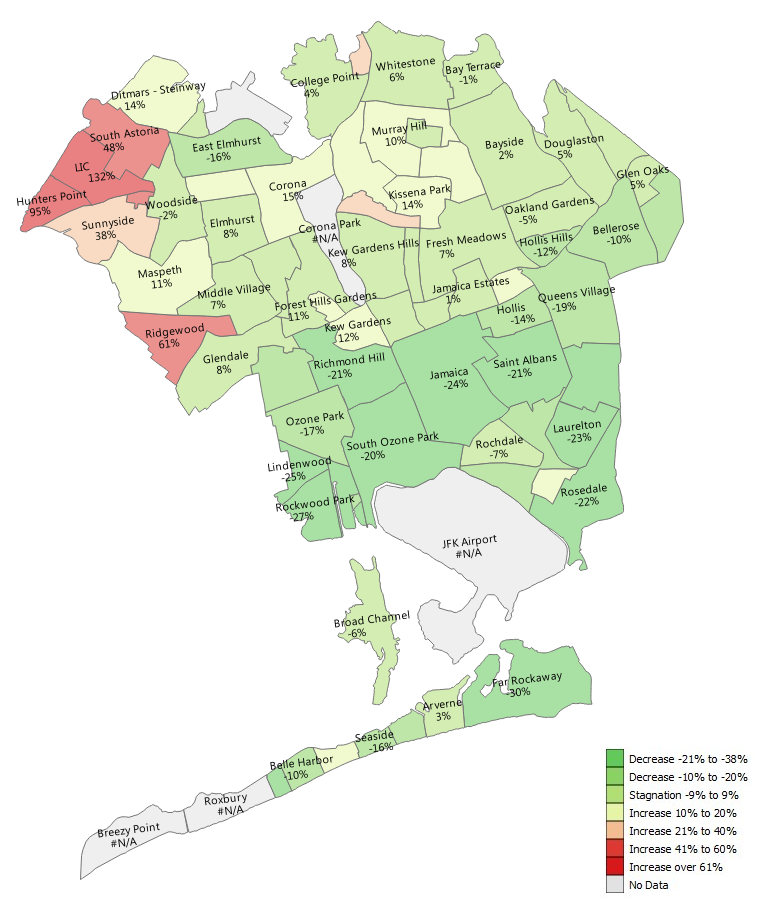
Many have argued that Queens’ gentrification process would be isolated and slow on account of the relatively high rate of ownership within the borough, and truthfully, till now, the neighborhoods that were affected the most were those in closest proximity to Brooklyn and Manhattan. Just take a look at the gentrification map for Queens between 2005 and 2015:
However, as Brooklyn manages to assert itself as a luxury market more and more, it seems only a matter of time until Queens will have to deal with the pressure and heat of not one, but two of the hottest housing markets in North America.
As seen in Point2 Homes’ infographic, Manhattan ranked second after San Francisco with a median sale price of $1,059,000; however, it was Brooklyn that had the most momentum as the borough managed to solidify its status as an expensive market. It ranked fourth in Point2Homes’ list with a median sale price of $620,000 and even managed to outrank Vancouver, generally considered the third most expensive city in the world. Granted, a weaker Canadian dollar pushed cities such as Vancouver and Toronto further down the list as well.
Taking into account Brooklyn’s new-found momentum, it’s no wonder that buyers have started to flock towards other boroughs. While some have even opted to relocate from Brooklyn back into Manhattan, a great deal more are turning their eyes towards Queens.
New Construction Permits Filed in Queens
Investors and developers seem to have noticed the increase in demand for housing in the borough already and were quick on the uptake. As a result, the number of permits filed for new residential and mixed-use buildings skyrocketed over the past three years. The permits amounted to:
- 3,903,625 square feet proposed in 2013.
- 6,709,328 square feet proposed in 2014.
- 8,906,937 square feet proposed in 2015.
At the same time, despite the new inventory added to the market, prices have continued to rise with the median price per square foot reaching $359 in 2015, an increase of 9.8% since 2013. If these numbers are anything to go by, it seems that Queens is indeed flying a bit too close to Manhattan and Brooklyn’s bright sun, which in turn would explain the presence of the borough alongside some of the most expensive housing markets in North America.
Latest Posts
Want to stay on top of the real estate market?
Access comprehensive property data and ownership information with intuitive research tools.
POSTED IN: Brooklyn Real Estate, New York Real Estate

Recent Reports
NYC Homeownership by the Numbers: How Household Type, Gender & Age Shape Who Owns in Every Neighborhood
In a city where homeownership is dominated by married-couple families, Manhattan stands as the only borough led by nonfamily owners. At the same time, residents younger than 35 make up less than one tenth of the ownership pool and female-led family households outnumber male-led families across 91% of NYC neighborhoods.

Prices Rise in 32 of NYC’s Leading Neighborhoods as City and Manhattan Hit Record Highs
Q2 2026 saw NYC and Manhattan reach historic highs, with Brooklyn and Queens marking close to new records as well. Meanwhile, Hudson Yards remained at the top, Central Midtown posted its highest price ever and Carroll Gardens marked its third consecutive quarter over $2 million

2026 Q2 Foreclosure Report: Bronx Caseload Hits 7-Year High, Brooklyn & Manhattan Slow to 4-Year Low
Manhattan yet again slowed to become the city’s least active foreclosure market, Brooklyn’s caseload dropped so low it barely edged out Staten Island, while the Bronx heated up enough to surpass all boroughs except Queens.